Golf: the 10 beginner mistakes that cost you shots

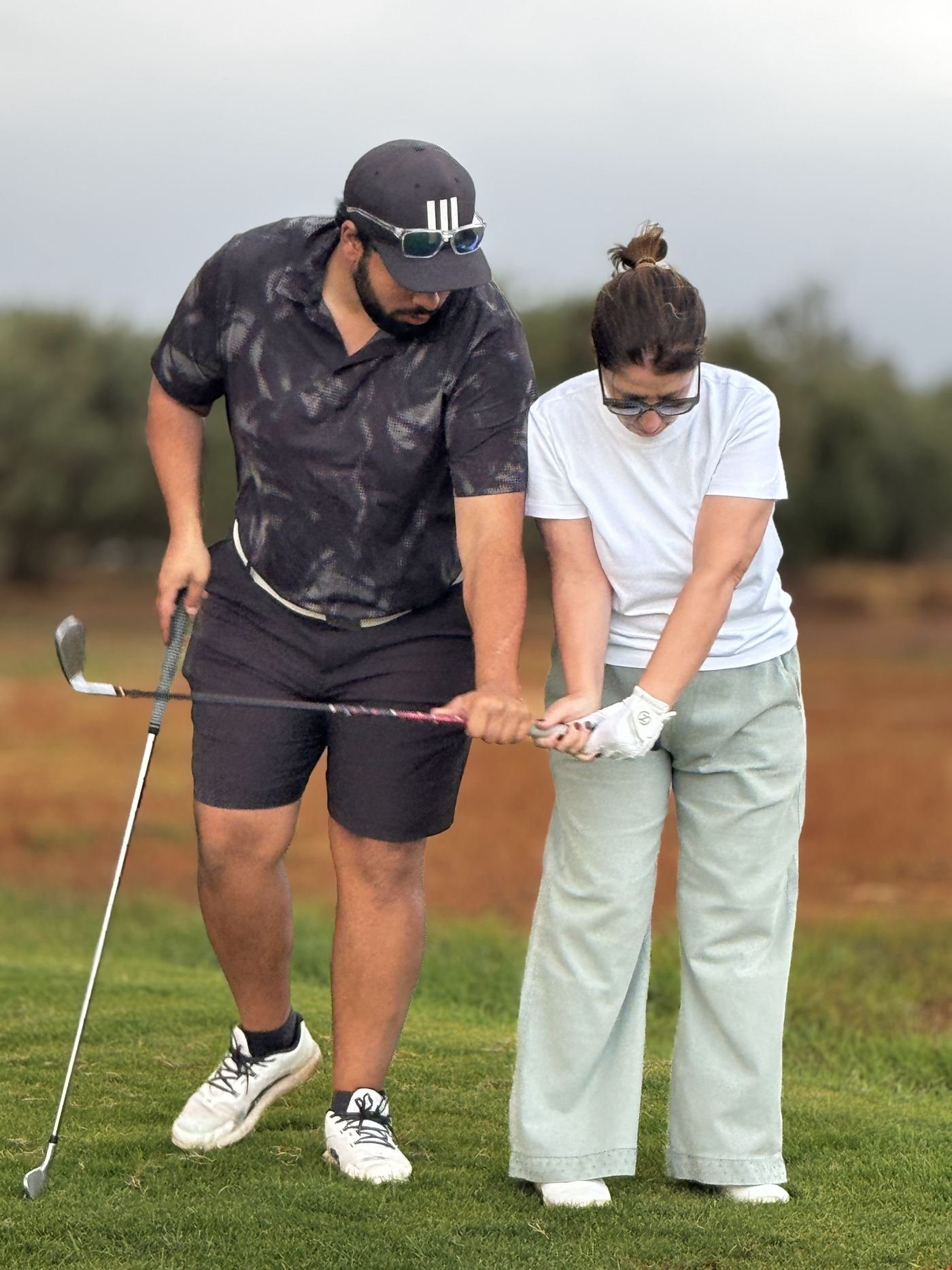
Beginner golf mistakes are almost all alike. In lessons, I see the same ones in players who started three months ago and in some who have been playing for years. The good news: most are quick to fix, as long as you spot them. Here are the 10 mistakes that cost beginner golfers the most shots, and the fix for each one.
Beginner golf mistakes in shot preparation
1. A poorly positioned grip
It's the number one mistake, and the least visible. Hands too much in the palms, turned too far towards the target or gripping too tight, and the clubface arrives open or closed at impact. The result: a slice or a hook, without understanding why.
The fix: the club sits in the fingers of your lead hand, not in the palm. Looking down, you should see two to three knuckles on that hand. Keep the grip pressure light: on a scale of 1 to 10, aim for about 4.
2. Sloppy alignment
Many beginners aim right of the target (for a right-hander) without realising it. They then compensate with their swing, and the problems pile up.
The fix: in practice, lay two clubs or alignment sticks on the ground, one on the target line and the other parallel to it at your feet. Align the clubface first, then your body. Feet, hips and shoulders parallel to the target line.
3. A hunched or overly upright posture
Rounded back, knees too bent, or the opposite, standing up stiff as a post: posture determines your rotation and the low point of your swing.
The fix: bend from the hips while keeping your back straight, flex your knees slightly, and let your arms hang naturally under your shoulders.
Swing mistakes
4. Trying to hit hard
It's a natural reflex: to hit the ball far, you force it. Your body tenses, your tempo speeds up, your strike deteriorates. And the ball goes less far.
The fix: swing at 70-80% of your maximum speed. Look for centred contact and a balanced finish, held for two seconds. Distance comes from a centred strike, not from effort.
5. Trying to “help” the ball up
Beginners want to help the ball into the air by scooping it with their wrists. So they often hit the ground before the ball, or top it.
The fix: trust the loft of the club. With an iron, the club should come down into the ball and take a little turf after it. Drill: place a towel 10 cm behind the ball and strike without touching it.
Mistakes in club selection and strategy
6. Choosing the wrong club
Most amateurs overestimate their distances. They pick the club for their best shot, not their average one. And regularly end up short of the green.
The fix: measure your real distances on the driving range or with a launch monitor, using the average distance of your good shots. If in doubt, take one more club.
7. Hitting driver off every tee
The driver is the longest club and the hardest to control. On a narrow hole or one lined with hazards, it costs you far more shots than it gains.
The fix: on every tee, ask yourself one simple question: where is the danger, and which club is sure to keep me in play? A hybrid in the middle of the fairway beats a driver in the trees.
8. Not having a routine
Without a routine, every shot is different: sometimes you rush, sometimes you overthink. Inconsistency often comes from there.
The fix: build a short routine that's the same before every shot: pick your target, one or two practice swings, alignment, then play. I explain it in detail in my article on the pre-shot routine.
Mistakes in the way you practise
9. Neglecting the short game
On a beginner's scorecard, a large share of shots are played within 50 metres of the flag: chips, bunker shots, putts. Yet it's the area people practise least.
The fix: spend at least half of every session on chipping, pitching and putting. A simple drill: 10 chips around the green, and count how many finish within a metre and a half of the hole. Write down the score and beat it next time.
10. Practising without a plan
A bucket of balls, the driver, and off you go. It's fun, but you don't improve much. Without a goal, you repeat your faults.
The fix: every session should have a theme (strike, alignment, wedge distances...) and a measure. One target per ball, regular club changes, and a few notes at the end of the session. That's the foundation for becoming a self-reliant player, able to correct yourself.
How to fix these mistakes faster
Recognise yourself in several of these mistakes? That's normal. Don't try to fix everything at once. Pick the two that cost you the most shots, work on them for a few weeks, then move on to the next ones.
The quickest way is still an assessment with a coach. In a private lesson in Marrakech or Paris, a 90-minute assessment pinpoints your priorities and sends you away with a clear plan. If you want to improve in just a few days, my progression camp in Marrakech lets you work on those points in an immersive, tailor-made setting.